Printmaking without a press using the new GelliArts Gelli Plate has really taken the interest of the arts & crafts world. You can buy a plate or now simply make one!
Permanent Gelli Printing Plates are made by Gelli Arts — you can order directly from them at gelliarts.com. Or you can order online from DickBlick.com, Dharma Trading Co., Amazon (only has one size) and locally from Stamp Asylum (Plano) or Creative Callings (N. RIchand Hills). — see also http://www.gelliarts.com/pages/retailers
Sizes: Rectangular: 6×6 ($19.99) 8×10 ($29.99) 12×14 ($69.99) Round: 8″ ($27.99)
The “gelatin” plate revolution started with homemade gelatin plates using gelatin and water, but they last only a few weeks and must be refrigerated. However, they can be reconstituted by heating and repouring.
For a more “permanent” gelatin plate, various artists have experimented with adding glycerin to the mix.
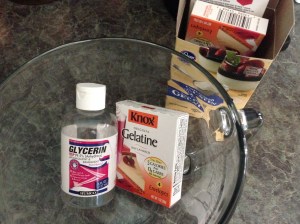
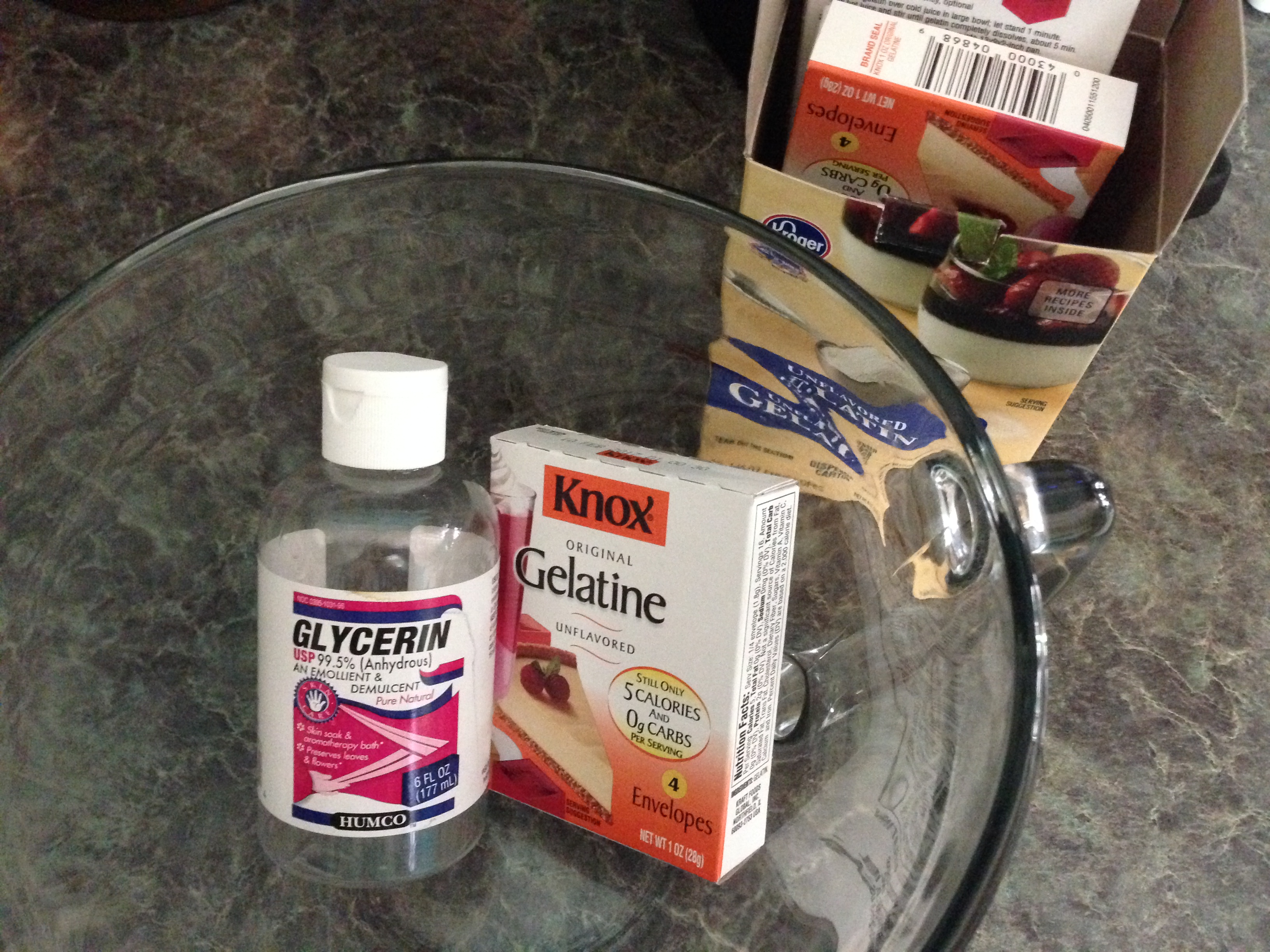
Ingredients:
The recipe that Edie Cournover used:
6 T of unflavored gelatin (7 of the small packs)
1 1/2 cups boiling water
1 1/2 cups glycerin (You can find 6 oz bottles in the CVS skin lotion section & in the Walmart drugs area next to the rubbing alcohol — you need 2 bottles)
Linda Germain has an alternative recipe. http://makemonotypes.com/ (her online course is well worth it in my opinion)
4 oz. unflavored gelatin (4 boxes or 16 packets)
2 – 6 oz bottles of glycerin
1/2 cup COLD WATER
1 1/2 cups boiling water
Equipment:
You can use a rectangular glass pan, one of those clear acrylic frames, or a metal pan or tray. You can also make plates in round shapes or cut fresh ones into geometric shapes or organic forms. If the pan is 9×13, the plate will come out about 1/4 inch thick. Adjust the recipe for larger or smaller sizes or thicker results. Thicker plates are less likely to tear.
Recipe:
First, mix the gelatin and glycerin together thoroughly in a heat-safe container, then added boiling water and stir slowly. Try not to introduce air into the mix. Alternative: Start with the cold water and 1 bottle of glycerin; stir gently and add glycerin; stir thoroughly and add hot water; stir gently and add remaining glycerin.
Pour the hot melted mixture into a pan — make sure first that everything is level in your setup. Skim the top with a strip of newspaper to remove air bubbles. Let it set. You can also refrigerate the mix until set (a few hours) or put in the freezer for 15-20 minutes. Or just leave it on the counter to cure, since it’s best not to move it until it’s firmer.
To remove the plate from the pan, use your fingers to go around working the gel back from from the edges. After you break that seal, you should be able to peel it from the pan and move it onto a plexiglas plate or whatever you will use as a printing surface. Note: a clear surface lets you place designs underneath to work with — or a paper so that you can gauge pulling prints better.
After curing, if your result is still a little sticky or malformed, you can microwave it (in a glass container) for 3-4 minutes to liquify it, stir it when needed. Then pour it, and let it set again. Sometimes it needs more or less water. The paint should roll on smoothly, although the very first paint application may not be smooth. You can also redo the melting and resetting if it tears (or just cut it down).

Results:
In contrast to the gelatin only plate, the gelatin/glycerin plate doesn’t need refrigeration. But it isn’t as permanent as a real Gelli Arts Gelli Plate since it is more fragile and will tear easily, especially if it is thin. You also can’t wash it under the faucet like the tougher plate. You can clean it by spraying with water and wiping with paper towels, or by using baby wipes.
Otherwise printmaking is just the same. After experimenting with acrylic and watercolor, the results are indistinguishable. But I think the homemade plate is slightly “friendlier” to watercolor because the Gelli Arts Plate has mineral oil in it.
NOT RECOMMENDED: You can also use rubbing alcohol in the recipe for permanent plate, but it is described as rather smelly. It’s also noxious. If you use that, then DON’T use the microwave process for resetting since alcohol is flammable. For that recipe and more on the process, see the Youtube videos at http://youtu.be/h9taUh073vQ (thefrugalcrafter) and http://youtu.be/Z6BQo63zsvA (Edie Cournoyer) Linda Germain gelatin plate videos: http://youtu.be/JZgBkBv8y5s
Storing your plate:
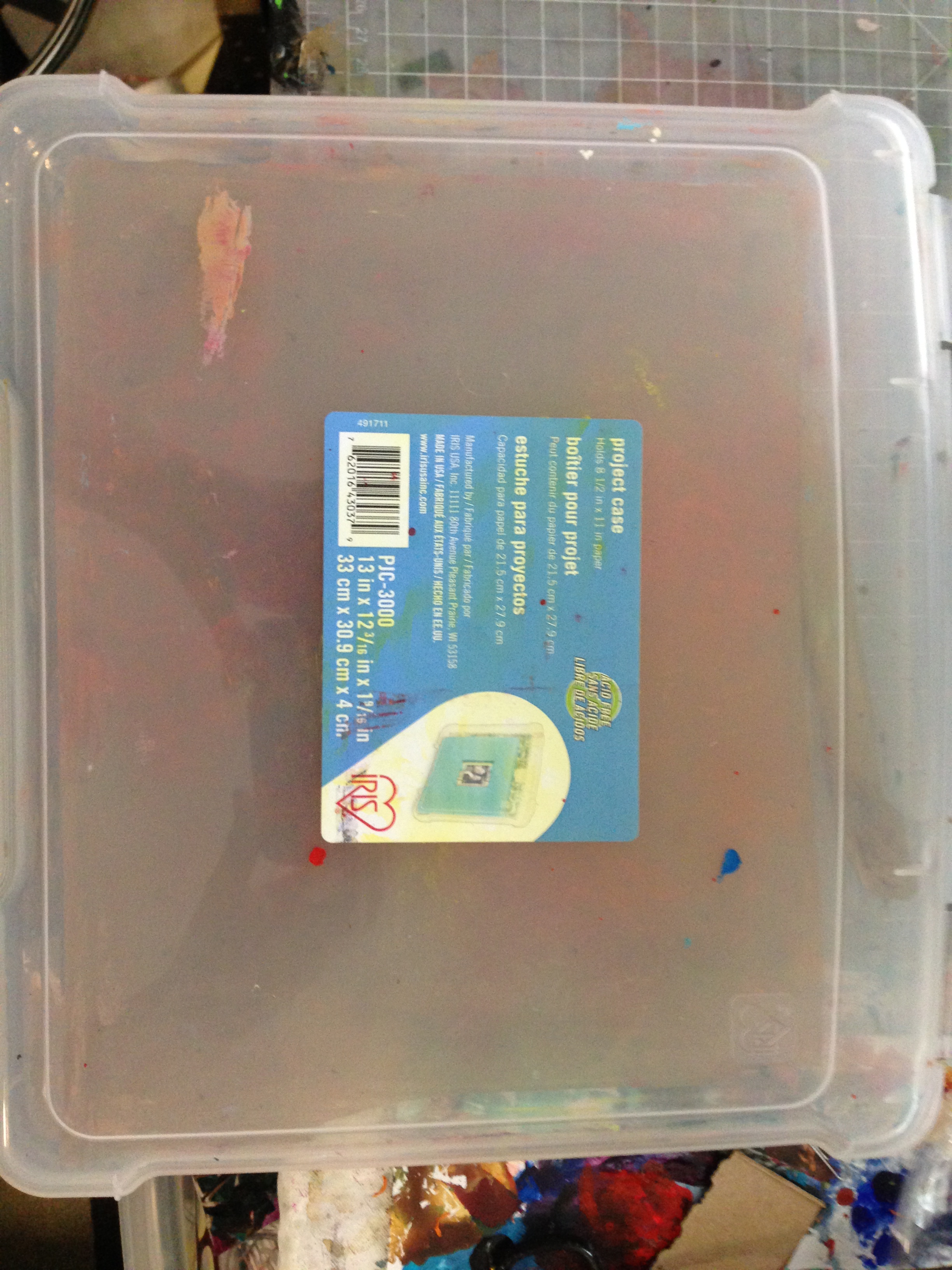
I keep and use mine is a plastic box. But you can store yours on a plexiglas plate. Just be sure to use a piece of plastic on top or plastic wrap around it to protect it, especially from evaporation of the water contained in the plate. If it hardens, just reconstitute it as mentioned above. You might have to add a tablespoon or two of water.


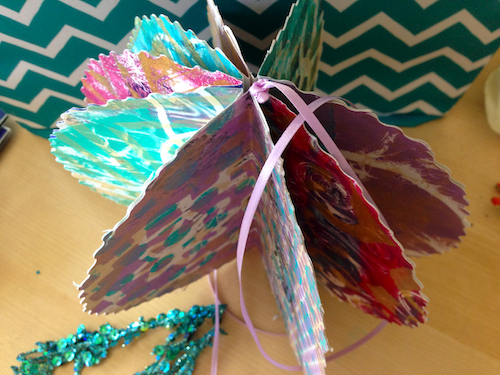

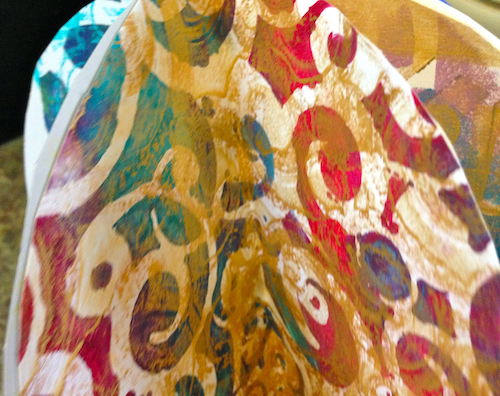

 Sharon Giles Art